

 Login
Login

Guantánamo on the Euphrates? Syria in a Time of Opportunity
Share

- Details
- Text
- Audio
- Downloads
- Extra Reading
In this lecture, Professor Stafford Smith looks at current challenges and opportunities in Syria. He has visited Syria mainly to help Camp Roj and Camp Al-Hol prisoners (including Shamima Begum and 60,000 others), while also dealing with Syrian opposition group Hay'at Tahrir al-Sham (HTS), when they imprisoned and tortured some of his clients. Now in power, HTS are facing the consequences of years of civil war. What are the challenges and what can advocates do to help them?
Download Text

Guantánamo on the Euphrates: Syria in a time of Opportunity?
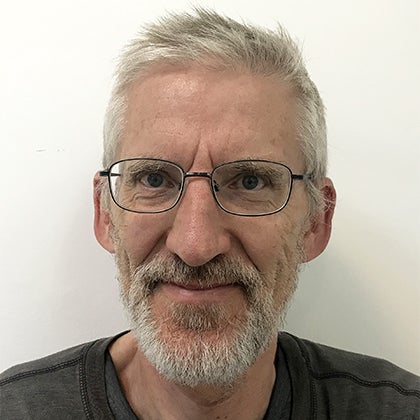
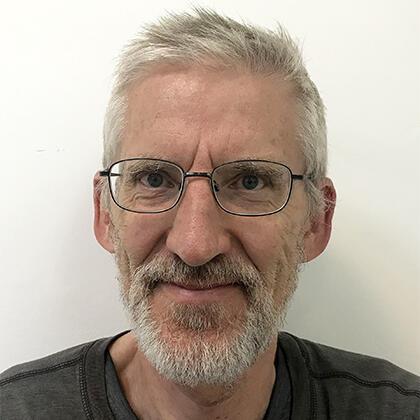
Professor Clive A. Stafford Smith
19th March 2026
I am going to be brief in my outline for this lecture, as it either has to be quite simple and brief, or a History of Military Misadventures that spans decades.
A phrase I tend to overuse: “The only thing we learn from History is that we don’t learn from History.” I am going to modify it slightly here. While my teenage son has a tendency to act as if all History was encompassed in his father’s life span (or, at least, the time since the invention of Minecraft), one does not have to be a Historian to learn some lessons. Let us just look at the last 25 years. We don’t even learn from current affairs.
My last lecture was on Afghanistan, where I have done a fair amount of work in the last four years. There, in the longest war the US has ever had – 2001-22 – we spent vast sums of money (estimates range up to $6 trillion), caused tens of thousands of deaths, only to find ourselves right back where we started with the Taliban in power, and nothing positive achieved for anyone. We then did what we also invariably do, which is to rant about how evil the Taliban are, seize $7 billion of their money for the “victims” of the war (who any sane person would identify as Afghans), while doing nothing at all to help those we presume to be their victims in a gender-Apartheid state.
One would wish that this was unique. I am not going to travel all the way back to Korea and Vietnam to look at the trend. The pattern of all our interventions in the region since the new Millennium has been the same. In Afghanistan (2001-22), Iraq (2003-21), Libya (2011-19), Yemen (2014-present), and Syria (2014-present), the well-established path has been for us (the US, the UK and allies) to decry evil governments, rain down Hellfire missiles from our Predator drones, and create even greater chaos. Then we leave the region and bemoan the failure of each country to metamorphose into a democratic nirvana.
We might add in Egypt, where the Arab Spring rapidly turned into another military dictatorship backed by the West. Very close by there is Sudan, the forever forgotten conflict. And of course we should not leave out Israel’s efforts (blindly followed by the US and other Western governments) to level South Lebanon, and render Gaza essentially uninhabitable.
Always we had our excuses: Benjamin Netanyahu had the best argument to start his war, given the mayhem of October 7th. In Afghanistan it was September 11th, though there was precious little evidence that Afghans had anything to do with it. In Syria it was ISIS. Apparently the world is close to destruction because of Iran. But these excuses – generally vastly over played – do not mask the consistent theme that runs through every one of these dreadful conflicts: in the immortal words of singer Michael Franti, “You can bomb the world to pieces, but you can’t bomb it into Peace.”
Similarly, over and over, nobody thought over the end game before rushing in, or even after being there for 20 years.
Sadly, but not totally surprisingly, History appears now to be repeating itself in Iran. The only certainty there is that many people will suffer from the Trump-Netanyahu war. Nobody begins to mention who might take over from the current regime in an imagined uprising. Nobody knows if it would be better or worse than the current autocracy – perhaps we would get a military dictatorship who would revive Savak and the excesses of the last Shah. Nobody in the Trump Administration would care.
* * *
The world turns to war far too quickly. I asked the Head Teacher of my son’s Primary School – a 20-year veteran of the British Navy – what wars he thought worth fighting in during his lifetime and he replied “none”. When given a full century, he only identified defending Britain against the Nazis. He would not choose, he said, to fight in any other war in which Britain has become embroiled. The same went for the U.S.
It is unsurprising that there is not a Nobel War Prize. It is a shame that Donald Trump sought to change the name of the Department of Defense to the “War Department”; if only he matched his ambition to win the Nobel Prize by rebranding it the “Paths to Peace Department.”
It is not difficult to identify other paths to winning the peace. History does teach us that much. The Marshall Plan was a generous act, where the U.S. helped to fund the reconstruction of West Germany, after Germany had inflicted horrors on the world. It was, of course, founded in good sense, especially when contrasted to the Treaty of Versailles (which closed out World War One), an act of pure revenge that contributed to the fact that the “War to End All Wars” was followed by another global conflict just 21 years later.
But it was not always inevitable that common sense would overcome a thirst for vengeance. The initial idea, in 1944, had been the Morgenthau Plan, which would have eliminated all of Germany’s arms manufacturing, and much of its civilian industry. It would also have included the deportation of millions of Germans to camps across Europe to provide slave labour in lieu of monetary reparations. An evaluation of the plan carried out by Herbert Hoover estimated that it would have caused 25 million German deaths from starvation. Inevitably desperate people would have taken desperate action again, no doubt led by Adolf Mark II.
In contrast, the Marshall Plan looked to rebuild all of Western Europe with roughly $150 billion in today’s money. This was spread over many countries, including Austria, Belgium, Denmark, France, Greece, Iceland, Ireland, Italy, Luxembourg, the Netherlands, Norway, Portugal, Sweden, Switzerland, Turkey, West Germany and the United Kingdom, and while the U.K. and France were the recipients of the most funds, the Germans were third on the list. This resulted in West Germany’s economy expanding without pause over a quarter century, leaving it a stable country and – thankfully - a force for peace in Europe.
There are those, of course, who think that such generosity is naïve: while the Morgenthau Plan might have been sadistic, there had been millions of victims of Nazism. Yet one might look at the Nuremburg Trials in the same way: from 1943 to the end of the war, Winston Churchill notoriously advocated summarily executing hundreds (and perhaps thousands) of senior Nazis without trial. Again, it was the Americans who insisted on trials. Nuremburg was an astoundingly generous response to the crimes of Hitler’s henchmen, and which provided vastly more due process than the risible Guantánamo military commissions have in the last 24 years (2002-26), and resulted in a significant number of acquittals. Again one might have understood the Allies’ thirst for revenge – but compare what Nuremburg did for the reputation of the U.S. with the sorry legacy of Guantánamo.
Consider what might have happened if we had decided to have an Afghan Marshall Plan rather than an Afghan War. (By 2001, Afghanistan had been riven by war since at least the Soviet invasion over twenty years before.) I did advocate, without anyone showing much interest at the time, that we offer Usama bin Laden and his henchmen a fully public trial in the Hague for the crimes of 9/11; before the U.S. did such a magnificent job of magnifying the appeal of Al Qaida to so many disaffected Muslims, there was a realistic chance that he would have seen it as the golden opportunity to spread his gospel. But whether this would have happened or not, the initial phase of the war in Afghanistan was essentially over in weeks, and if the U.S. had turned to generosity rather than revenge, things might have been very different.
But even if we had to have a war, it was a war that we began. It was a war where we never had a plan for what to do at the end. We muddled along with new “plans” for winning it – the “Surge” and other foolishly branded ideas. We never had a surge of peace talks, until it was much too late – until after we had released the Taliban prisoners we had abused for over a decade. At the same time, we mortgaged all the goodwill we had in the wake of 9/11 by torturing prisoners, putting them in Guantánamo Bay and still, a quarter century later, not giving the ring leaders a fair trial. We emphatically lost the peace, because we never really planned for it.
While we did not foresee the inevitable, when the last American soldier left Kabul in August 2021, the Taliban strolled back into the city without a shot being fired. Imran Khan told me a story about the Taliban coming to meet with him in 2020. He urged them to negotiate a peace with the Americans. They politely said there was no need to. The corrupt Gilani government was so unpopular that nobody in the well-American-armed Afghan National Army would show the slightest interest in standing up for it. While Donald Trump insists it was all Biden’s fault, the collapse of Kabul was simply an inevitability, albeit one apparently not foreseen by the sophisticated CIA.
Today, the government income in Afghanistan is estimated to be around $3 billion a year. The $7 billion we have impounded from the Afghan national bank is therefore two years of their money. But this pales into insignificance when one considers the $6 trillion spent on the war: That would be two thousand years of their income, all wasted on a war that achieved nothing but misery. If we had invested on hundredth of that (a few billion that would barely be missed on Elon Musk’s personal ledger) we would have had staunch friends in the region, and women would be far better off than they are today.
* * *
So we turn to Syria. It is a complex challenge. I have travelled there several times over recent years.
It is riven with different interest groups. Some of these one would not want to associate with at all: my client Bilal Abdul Kareem perhaps illustrated it best. He is an American comedian-turned-journalist who is dedicated to promoting the truth about the conflict, and to building a better future for the country. He would go around the country interviewing people. He refused to talk to ISIS or the forces of President Bashar “Mad” Al-Assad, but he did give voice to everyone else – The Free Syrian Army, Hay'at Tahrir al-Sham (HTS), the Kurds (the SDF), and many other disparate groups.
To date, we have committed all the same errors in Syria as elsewhere. Rather than having Guantánamo Bay, we insisted on a new Guantánamo-on-the-Euphrates (GOTE) – the two institutions called Camp Roj and Camp al Hol. While Gitmo was comparatively small (780 men), these camps held roughly a hundred times as many, over 70 thousand detainees, the largest proportion being children. Men were held separately in very secretive prisons – I was only allowed into one once to see then-British national Jack Letts. While Gitmo due process was a pale imitation of Nuremburg, GOTE had no due process at all. While Gitmo had 500 pro bono lawyers, I was one of just two lawyers who ever got into GOTE. While Britain welcomed 16 men home from Gitmo, and even paid them large sums for British complicity in their torture, when it came to the women and children in GOTE, the government stripped Shamima Begum and others of their nationality on the absurd pretext that this foolish young woman was a threat to national security.
Throughout all this, the Rojava authorities, made up mostly of Kurds who prefer – inclusively and democratically - to be called the Autonomous Administration of North-East Syria (AANES), wanted nothing to do with the camps, and would let any prisoner go if their home government allowed it. I got 20 people out easily in my first few visits, as the U.S. in particular encouraged and facilitated their repatriation. I had lunch with one of the women leading the AANES, and she welcomed the notion of having trials. The roadblock turned out to be the “Coalition” (led in this respect by the British).
Indeed, the ultimate irony is that this time the Americans (in the person of Donald Trump) were right, calling for the immediate closure of the camps and repatriation of the prisoners. It was the British who marshalled their European and Canadian allies to resist this, preferring to strip their citizens of their passports.
So we made precisely the same mistakes in this sense – forcing the hugely democratic Kurds to be complicit in our violation of human rights.
At the same time, when President Erdogan launched an attack on the Qamishli area of the AANES, I was there. He is another person who has not shown much appetite for reaching a settlement with the Kurds who live in Turkey, and he thought it in Turkey’s interests to launch an attack not against the despotic Assad, or the maniacal ISIS, but on the only truly democratic entity in the region.
The British – who were responsible, in the wake of World War One, for drawing lines dividing Kurdistan into four parts and allotting one segment each to Turkey, Syria, Iraq and Iran – stood by and did nothing.
So much for preparing the way for a more democratic Syria when Assad might depart.
* * *
Through all this the West appears to have had little idea that Abu Mohammed al Jolani (now going by Ahmed al Sharaa) and his HTS were, just like the Taliban in Kabul, going to sweep Bashar al Assad out of Damascus in 2024. Nobody seemed to have much interest in meeting with him.
I had some dealings with HTS five years ago, at the height of the civil war. It involved Bilal Abdul Kareem. As in Afghanistan, the U.S. was using drone to kill people – execution without trial. As in Afghanistan, the U.S. intelligence was terrible, and their targeting worse. They thought Bilal was an extremist, and while he is extremely funny as a former stand-up comedian, he is no Bin Laden. Indeed, he made some enemies in HTS by criticizing their use of torture. Meanwhile the CIA had tried to kill him with drones five times – and missed each time, though by then they did owe him three vehicles. We were in litigation to try to stop this in Washington DC when I got a call from his family that he had been detained by HTS.
I found the contacts of the HTS PR official, and started messaging him about Bilal’s plight. I offered to come down and represent him in any trial they elected to put on – if it was truly fair, I told them, this would do their tarnished image a lot of good. In the meantime, I warned them that if they continued to hold Bilal in his current cell, they would become America’s co-conspirators in his assassination. At last, the CIA would know where he was, and have an easy target. Unfortunately for HTS, I said, a bunch of their people would also be incinerated when the Hellfire missile struck.
It did not take long for good sense to prevail. The HTS people let Bilal go and sent me a roses emoji for warning that keeping him locked up would bring death and destruction down upon them.
They were, even in this limited interaction, people I found I could talk to. That does not mean he (and all his people) are going to latch immediately onto every provision in the Universal Declaration of Human Rights. There have been troubling incidents of reprisals and killings, just as there were previously some HTS members who tortured Bilal and others.
Indeed, Bilal has recently been rearrested without any charge that we know of, after what was perhaps a slightly ill-conceived use of his new free speech rights – criticizing the nascent government.
It would be a miracle if President al Sharaa were able to attain his stated goal, which is to bring together the full Syrian nation. He had hardly started work before Netanyahu dispatched Israeli forces into the southwest of the country, using the well-worn claim that it was necessary for security.
It is just a shame that the U.S. and U.K. seem not to have done much to help al Sharee, though again Trump has, in his mercurial way, voiced respect for the new President of Syria.
* * *
It is relatively easy to identify what one should not do when dealing with an unpleasant neighbour, whether this is a person on your street or a country. The rules are so obvious as to be barely worthy of stating:
- First, try every alternative before you start shooting.
- Second, it is better to shell out a lot of money for a solution, without necessarily having any expectation of return, rather than spending a hundred times as much and many lives on the inexorable failure of battle.
- Third, be very clear about what your plan is for change. Reevaluate it from time to time, and if it is working, persevere; if not, pivot to something else.
- Fourth, be sure that you know who your effective allies are in your efforts, and that you never betray them no matter what the issue.
- Fifth, be sure that the first casualty in your disagreement is NOT your most valued principle (in too many cases the violation of every human rights principle that you hold dear.
- This is important not merely because you should value your good reputation, but also because to do otherwise is to act the Hypocrite, and hypocrisy is the yeast that promotes hatred.
- Sixth, remember that people do not always speak the same language, but that every major religious faith shares at least a suggestion of peace and harmony.
- Seventh, bear in mind that there is no Nobel Prize for War.
This is not rocket science but it appears to have eluded most of the leaders in the region for a long time. Certainly to date Britain has violated pretty much all of them.
* * *
So what for Syria? We must support President al Sharaa, and spend enough time to learn his best qualities and how to bring them out. We must help him in his effort to put together his shattered country.
Second, we must be true friends to the Kurds, who are our kindred spirits, as well as being the victims of lines we drew on the map. They are also our best allies when it comes to moving towards a democratic system in Syria, as they are more democratic than Britain and America (by far) and are already a respected stakeholder in Syria with whom President al Sharaa must do business.
Third, we must encourage those to whom we previously gave refuge to go back and help rebuild Syria.
Fourth, we must provide significant aid to the Syrians in building their institutions, and in giving them credibility.
Fifth, we must do what we can rein in those who think they benefit from different forms of turbulence in Syria – whether it is Turkey (our NATO ally) or Israel.
* * *
All of this is very topic of course because of the latest war in the region in Iran, which runs from 2026 to goodness knows when. We can hold out little hope for Donald Trump, who has no idea that any rule should be applied to him. But Keir Starmer is a much greater disappointment, as he is already well along the road to violating everything in the same way we have for the past 25 years.
He needs a plan.
He needs to remember his principles (Harold Wilson refused to get involved in Vietnam).
He needs to help his friends. (He should help the Kurds close Camp Roj.)
He needs to help al Sharaa, who is likely to be there in future.
Above all he needs proactively to see a Nobel Peace Prize, not one for war.
© Professor Clive Stafford Smith 2026
Part of:
This event was on Thu, 19 Mar 2026
Support Gresham
Gresham College has offered an outstanding education to the public free of charge for over 400 years. Today, Gresham College plays an important role in fostering a love of learning and a greater understanding of ourselves and the world around us. Your donation will help to widen our reach and to broaden our audience, allowing more people to benefit from a high-quality education from some of the brightest minds.


